Tuesday, June 26, 2012

In store...

Some new things in the shop.

I have this lovely, fresh  cotton shibori by the metre:


We always have kokeshi dolls in the shop but I've just put out a new selection. Here are a few of them:

This creamy silk habutae feels beautiful.  Perfect for dyeing:


A vibrant cotton child's kimono - early- mid 20th century:


I love this old (pre-war) kimono - the silk is beautifully soft and the  subtle grey contrasts wonderfully with the red lining:


A Hotei (God of Happiness) incense burner: 


I've made up some quilters' vintage charm packs:


Monday, June 18, 2012

Meisen

At the moment we have some terrific meisen garments in the shop.  Meisen is a silk (or occasionally synthetic) ikat  which was developed in the late 19th century and was a popular mass-produced, everyday kimono fabric through until the post-war period.  It developed after the introduction of modern weaving and dyeing techniques from Europe.  These technical developments coincided with social reforms in the Meiji period which for the first time allowed ordinary people  to wear silk regardless of their traditional social status ( if they could afford it of course). Here's what we have in the shop right now. I love this bold check kimono. If it doesn't sell soon I'll keep it for my collection.


I also like this haori. The vibrant, dynamic design is typical of meisen.


And a couple more kimono.  The green one has a red silk lining which indicates that it's a pre-war garment. Post-war garments typically have a white lining though it isn't a hard and fast rule for dating meisen as some garments are recycled with a different lining.  And  of course some don't have linings at all. 


The following  is a fabric that I have in the shop. It's a traditional plum blossom design which isn't very typical of these vibrant meisen patterns.  In  early-mid 20th century meisen designers took much of their inspiration from the west,  and roses and stylised art deco floral motifs are more common than plum and cherry blossoms.


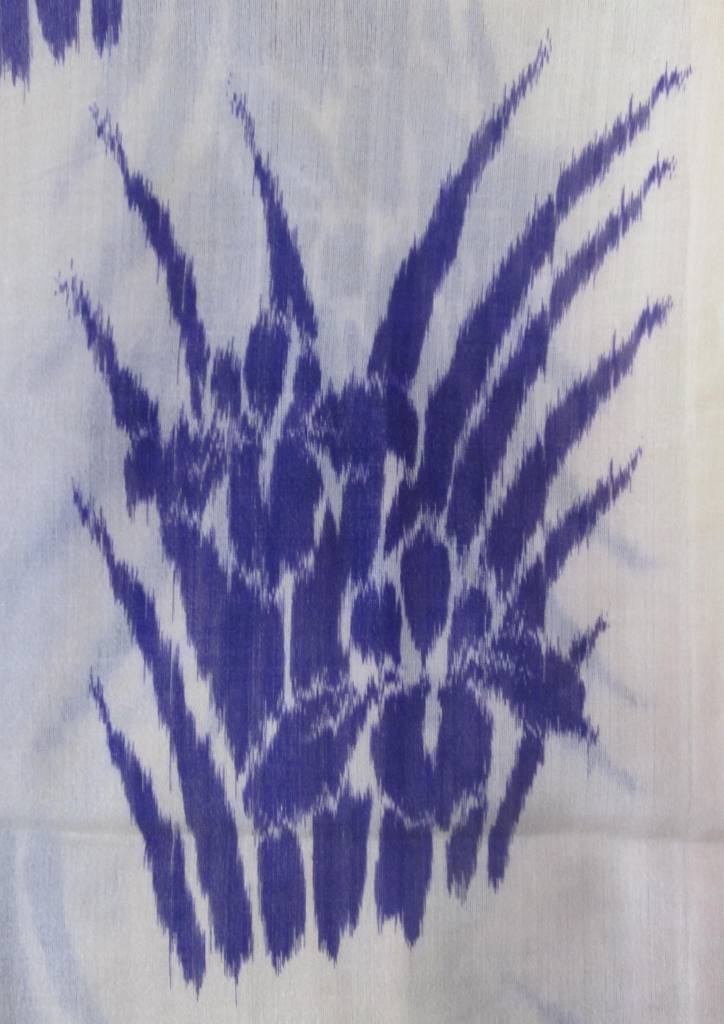
The rest of the photos are from my own collection.  This iris pattern is another traditional Japanese motif but earlier than the plum blossoms.  Unlike traditional cotton ikat (kasuri) in which the threads are tie-dyed before weaving, in meisen the threads are usually direct-dyed with a stencil and then woven. As with kasuri, the meisen technique necessarily creates a soft, fuzzy edged design which is very much part of its charm.  Often both the warp and weft threads are stencilled. In this 'ayame' iris design only the warp has been stencilled.


Here are some more typical meisen designs. I only have a  few in my collection (I just don't have the space to collect even a fraction of what I'd like to!) and there are much bolder designs out there with a stronger link to modern art movements. Here's some of what I have though.  I only just noticed what a limited colour range I have.  I think this is more a reflection of my taste than the  variety of vibrant fabrics that were produced! I will try and find some more designs to show you in a future blog.


Originally meisen was popular for all types of women from schoolgirls to geisha but it became very much the preferred kimono of the urban middle-class, and especially young women who wanted their traditional outfits with a western  touch. I can imagine the 'modern girls' of the 1920's and 30's promenading in the Ginza with their trendy bobs and their bold meisen kimonos.  Designs became more sombre in the pre-war and  early war time periods. The industry was restarted after the war but didn't survive long. Meisen kimonos were for everyday wear and not for formal occasions  and so as western clothing took over for everyday wear the demand for this kind of kimono decreased.  Meisen originated in Chichibu in Saitama prefecture not far from Tokyo and the major production centres were in the Kanto region around Tokyo. Another centre was Isezaki which had a long history of kasuri production. This is a  1920's or 30's poster that Takashi bought me recently advertising 'Isezaki Meisen':


* Much of my information has come from 'Meisen: Early 20th Century Fashion Kimono' by Annie Van Assche in Daruma: Japanese Art and Antiques magazine #22.  (It still makes me very sad that this fantastic magazine is no longer published)


Monday, May 14, 2012

Finally!

Our online shop is finally online! It's been a long time coming.  Here are some glimpses of what we've got in our catalogue:


Sunday, April 29, 2012

In Store - Stamps

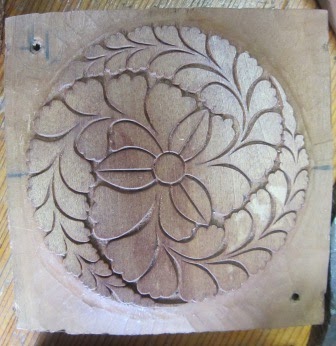
We often have various old Japanese stamps in the shop and they're always popular. The box of old wooden textile stamps that I put out this week are definitely my  favourites so far. There's a mix of traditional motifs including some very finely carved kamon (family crests). I took these photos before I put them out in the shop and quite a few of them have already gone.  I've been strong and only kept one for myself - I would love to have kept them all.


Friday, April 20, 2012

Around the shop...

Life has been hectic with one thing or another and I'm afraid I haven't been doing a very good job of keeping my blog up to date... I will try and write soon but in the meantime here are some pics from around the shop.
I'm putting out a few hina dolls:


I've started stocking some Olympus brand sashiko threads in a nice bright range of colours including some lovely variegated ones.


I've put out a box of terrific old theatre portrait photos, many of them signed


And more rolls of kimono fabrics  including a lovely big roll of black wool


I've got lots of mizuhiki paper cords  out at the moment  -  for beautiful gift wrapping


We've got a sale starting next week so I'll be restocking the rummage baskets


And discounting lots of things including our already incredibly cheap poly threads. These are excellent quality and very popular for machine embroidery. We're able to sell them cheaply because they're discontinued colours.


And the remnant basket is overflowing...


Monday, March 5, 2012

In Store...

Here's  a sample of recent additions to the shop...

At the moment I'm unpicking some lovely yukata. These are 100% cotton and a perfect weight for quilting.  (I know it horrifies some people that I unpick so many old kimono so in my next blog I might talk a little about that...)


We always have a small selection of netsuke in the shop. We recently put out a few more and this  charming ojime bead is my favourite. This serene little boy is only about 2cm tall. Ojime beads were used to pull together the cord that connected the netsuke to whatever item  (eg a medicine case) they were holding in place. The netsuke was tucked up and over a man's obi to secure the case hanging below.

These metallic papers were  intended for  weaving. They were cut into fine strips and used as woven embellishments on garments such as haori. Of course they can be used for other crafts as well.


Similarly this necktie silk doesn't have to be used for neckties! It's very affordable and lovely for other clothing and crafts.

Some wonderful little retro metal food containers. These aren't big enough for a whole 'bento' lunch but were used for side dishes and make great storage containers.

I've put out some rolls of mid-20th century kimono sample fabric. I sell these as whole rolls.   They were used as commercial samples to show what designs and colours were available. There was also a tradition of making the rolls up into nagajuban undergarment kimono when they weren't needed anymore.

Finally,  I've also put out a box of old  handmade washi paper oddments. Here are a few examples...